
Latest updated: 1 September 2026
Quick answer: Boku and other Pay-by-Mobile routes are small-deposit tools, not withdrawal methods. The charge lands on your UK mobile bill or pre-paid credit, but any casino cashout still needs a separate route such as debit card, bank transfer or an e-wallet. Payout timing depends on the operator completing approval, KYC and any source-of-funds checks, then on bank or payment processing, weekends and account-specific review.
- Method role: deposit-only mobile-bill payment route.
- Main limit: small transactions only, with UK charge-to-mobile caps and possible tighter network or operator limits.
- Withdrawal reality: do not expect winnings to be paid back to your phone bill.
- Before playing: check bonus eligibility, mobile-network charges, GAMSTOP status and the withdrawal method you will use later.
- Safer gambling: gambling is for adults aged 18+ only; use GAMSTOP, GamCare or BeGambleAware if play is no longer controlled.
UK casinos where Pay-by-Mobile may be available
Pay-by-Mobile is not offered at every UKGC-licensed casino, and integrations can change without notice. Treat any list as a cashier-check starting point, not a guarantee that your network, contract type or account will see the option today. For a wider view of payment routes, see our UK withdrawal methods hub.
These are UKGC-licensed operators we have reviewed on casinowithdrawal.co.uk. We earn commission from some of them when you sign up via on-site links. Availability of Pay-by-Mobile, bonus eligibility and withdrawal routes must always be confirmed in the live cashier before you deposit.
What Boku and Pay-by-Mobile actually do
Pay-by-Mobile (also called “Pay by Phone” or “Charge to Mobile”, CtM) lets you deposit at a casino by adding the amount to your mobile network bill. Your network (O2, EE, Vodafone, Three, Sky Mobile, Virgin, giffgaff, Tesco Mobile and similar MVNOs) then collects it with your monthly bill, or deducts it from pre-paid credit straight away.
Two aggregators handle most UK casino integrations between merchants and mobile networks:
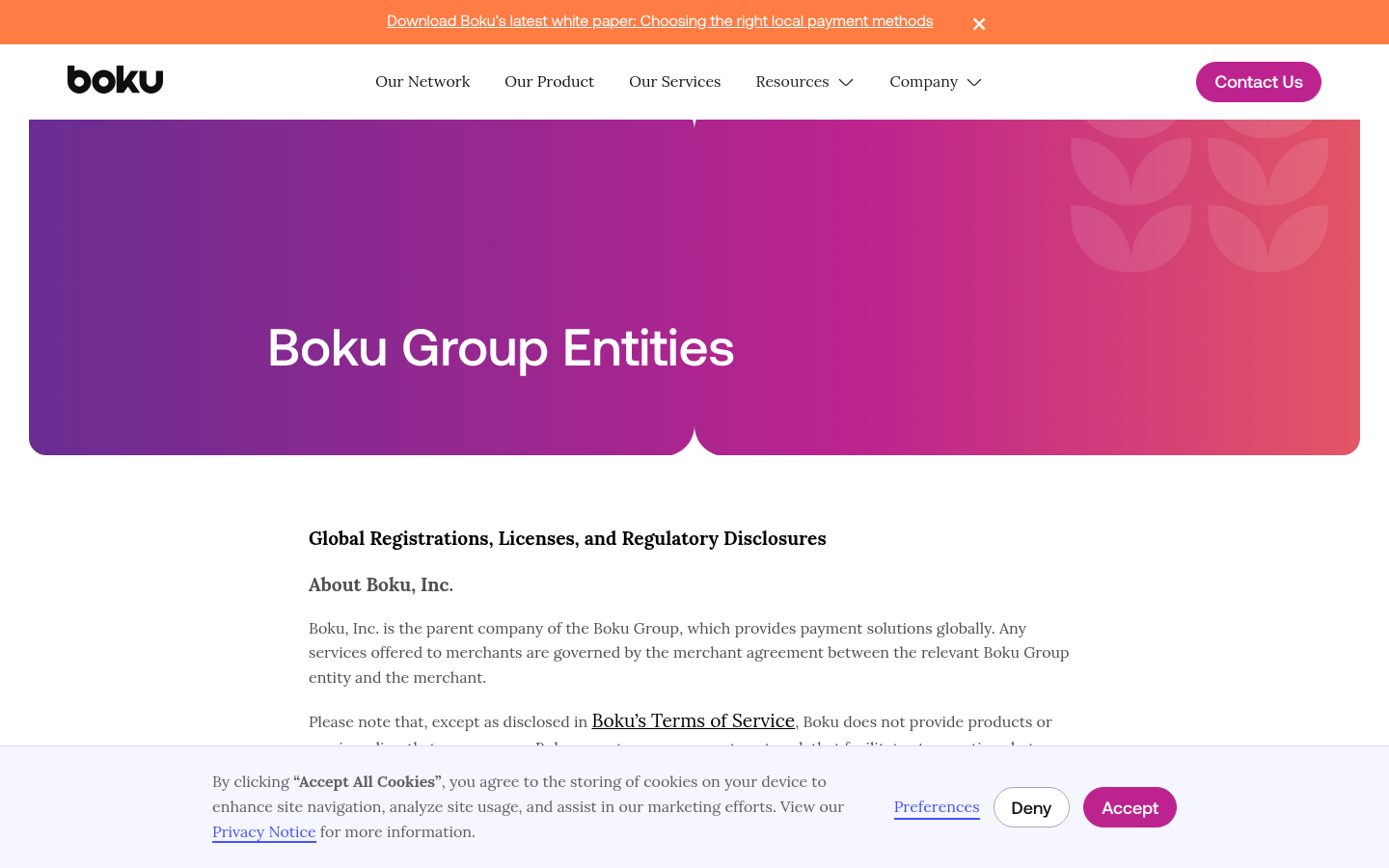
- Boku. The UK carrier-billing entity is Boku Network Services UK Limited. A separate company, Boku Account Services UK Limited (FCA firm reference 900030), is FCA-authorised as an Electronic Money Institution and provides e-money and open-banking style services, but Boku’s own disclosures state it does not provide direct carrier billing in the UK. The “Pay by Phone” or “Boku” label at a UK casino uses the carrier-billing entity, which is regulated as a premium rate service provider under Ofcom rules, not as an FCA payment institution. Boku, Inc., the parent, is listed on the London Stock Exchange AIM market (BOKU).
- Fonix plc (LSE AIM: FNX, listed October 2020). Fonix describes itself as the largest SMS and carrier-billing aggregator in the UK and powers Pay-by-Mobile at a smaller set of casino brands, sometimes alongside or instead of Boku depending on the operator’s integration.
Zimpler is often mentioned near Pay-by-Mobile guides but belongs in a different category. It is an account-to-account Pay by Bank route, closer to Trustly than to charge-to-mobile. TrueLayer completed its acquisition of Zimpler on 3 March 2026 after Swedish regulatory approval. If you see Zimpler at a UK casino, treat it as part of the bank-rail family, not as a phone-bill deposit.
Payforit, the old shared trust-mark for UK charge-to-mobile flows, was retired in 2019. The underlying carrier-billing technology continues, but guides that still talk about “Payforit casinos” are using outdated branding.
How to deposit at a UK casino with Pay-by-Mobile
- In the casino cashier, choose “Pay by Phone”, “Pay by Mobile”, “Boku” or a similarly labelled mobile-bill option.
- Enter the deposit amount. Most UK casinos keep Pay-by-Mobile to relatively small increments because of the regulatory and network caps below.
- Enter your UK mobile number. The casino or provider sends an SMS confirmation request, or redirects you to a Boku or Fonix authentication page.
- Reply to the SMS or confirm on the redirect page. That step acts as Strong Customer Authentication by proving possession of the SIM.
- The deposit credits your casino balance once the network accepts the charge.
- On post-paid contracts the charge appears on your next bill; on pre-paid SIMs it is deducted from your existing credit immediately.
This is a one-way transaction. UK mobile networks do not offer a standard merchant refund route that credits casino winnings or routine refunds back to a phone bill. Withdrawals must use another method registered at the cashier, typically a debit card or bank transfer.
Why Boku is deposit-only, not a casino withdrawal method
This is the most important practical point before you choose Pay-by-Mobile at a casino.
Carrier billing is built for small, billable purchases, not for paying money out to players. There is no mainstream UK “Pay-by-Mobile withdrawal” equivalent to Trustly cashout or a debit-card payout. For a similar UK deposit-only mobile-bill route, see our Siru Mobile guide. If you change your mind after depositing, the casino cannot normally push the funds back to your mobile bill.
What that means in practice:
- You need a separate withdrawal method on the account, such as debit card, bank transfer or an e-wallet the operator accepts for cashout.
- If a casino reverses a Pay-by-Mobile deposit (for example after a duplicate charge), the refund may go to a registered debit card or sit as playable balance until you withdraw by another route.
- Many UK casinos apply closed-loop rules: the cashout method often needs to have been used for a deposit first. If Pay-by-Mobile is your only deposit route, you may need to add and verify a debit card before your first withdrawal.
- Even when another method is available, payout timing is not fixed. The operator may need to approve the request, complete KYC and any source-of-funds checks, and only then hand the payment to your bank or e-wallet. Weekends, bank cut-offs and account-specific review can add further delay.
If you want deposits and withdrawals through the same verified banking route, our Trustly Open Banking guide or Apple Pay guide is a better starting point.
UK mobile network spending caps
UK charge-to-mobile services sit inside statutory spending limits rather than casino-chosen caps. Under the Payment Services Regulations 2017 (Schedule 1, Part 2(l)), the electronic communications exclusion applies only if each payment stays within:
- £40 per single transaction
- £240 per calendar month for that subscriber
These figures apply across major UK networks and the MVNOs that use them, because they come from the same UK rulebook. The FCA treats individual phone numbers or SIMs as separate subscribers when applying the monthly total.
In practice, some networks, providers or casino integrations set lower day-to-day limits than the legal ceiling. Affiliate and comparison sites often quote a £30 daily cap at specific brands, which can reflect provider-side tracking rather than the statutory £40 single-transaction maximum. If a deposit exceeds what your network or integration allows, the charge fails before the casino balance updates.
For larger or repeated deposits, debit card, Trustly or bank transfer is the appropriate route.
Ofcom and charge-to-mobile regulation
UK charge-to-mobile services are regulated as premium rate services (PRS). Since 1 February 2025, day-to-day regulation moved from the Phone-paid Services Authority (PSA), which has ceased operating, to the Office of Communications (Ofcom) under the Regulation of Premium Rate Services Order 2024.
For Pay-by-Mobile gambling deposits, the practical effect is unchanged in broad terms: the provider must disclose the charge clearly, handle complaints, and stay within the legal spending framework. Boku Network Services UK Limited tells consumers to raise complaints with Boku first and, if unresolved, escalate to Ofcom. Ofcom publishes a Premium Rate Services Register and consumer guidance on unexpected phone-bill charges.
The older PSA Code of Practice 15 no longer governs new complaints after the transfer, although historical PSA enforcement records remain relevant for providers checking sanctions history under the 2024 Order.
UKGC Licence Condition 6.1.2 (the credit-card gambling ban from 14 April 2020) does not treat Pay-by-Mobile as a credit-card payment. Post-paid mobile contracts still involve paying after use, so it is worth being deliberate about deposit pace. The £40 / £240 caps partly limit how much exposure can build before the bill arrives.
Bank gambling blocks and mobile network gambling controls
UK bank gambling blocks (Monzo, Starling, Revolut, NatWest, Lloyds, Halifax, Barclays, HSBC and similar) do not stop Pay-by-Mobile, because the deposit never touches your bank account. The block sits on the bank payment rail; charge-to-mobile sits on the mobile-network rail.
Several UK mobile networks now offer their own gambling or premium-service controls in their apps, including bars on charge-to-bill transactions. If Pay-by-Mobile suddenly stops working, check your network app for “Charge to Bill”, “Premium services” or similar settings. Some networks allow you to reverse a bar only after a cooling-off period.
For UK-wide self-exclusion across UKGC-licensed online gambling, register with GAMSTOP. Licensed operators must offer GAMSTOP and block registered customers; timing can depend on how quickly the operator matches your details across its brands.
Welcome bonuses and Pay-by-Mobile
Pay-by-Mobile is commonly listed as an excluded deposit method in UK casino and bookmaker welcome-offer terms. The pattern mirrors Skrill and NETELLER: operators often restrict sign-up bonuses to debit-card or bank-funded first deposits to reduce bonus abuse and chargeback risk.
That exclusion is common, not universal. A small number of brands may still allow mobile-bill deposits to trigger a welcome offer, but you should read the live promotion terms before depositing. If bonus eligibility matters, using a debit card or open-banking route for the qualifying deposit is usually safer, with Pay-by-Mobile reserved for later top-ups if the cashier allows it.
Pay-by-Mobile versus Trustly, Apple Pay and debit card
Compact comparison from a UK player’s perspective:
| Pay-by-Mobile strengths | Pay-by-Mobile limits and alternatives |
|---|---|
| Deposits charge to your mobile bill or pre-paid credit, so bank-card details do not go to the casino | Deposit only. Withdrawals need a separate method and operator approval, KYC and payment processing can affect timing |
| Strong Customer Authentication via SMS or carrier confirmation, without opening a banking app | Legal cap of £40 per transaction and £240 per month under PSR 2017, and some integrations apply lower day-to-day limits |
| Can work on pre-paid SIMs as well as post-paid contracts if the network and balance allow | Direct UK casino acceptance has narrowed; several major brands removed or never offered mobile-bill deposits |
| Boku’s UK carrier-billing entity is regulated under Ofcom PRS rules; a separate FCA-authorised EMI entity exists but is not the casino phone-bill route | Welcome bonuses are often excluded when depositing via Pay-by-Mobile; always check promotion terms |
| Statutory spending caps can act as an incidental brake on very large single-session deposits | If you want deposit and withdrawal through the same banking rail, Trustly or debit card is usually more suitable |
| Mobile-network gambling controls, where available, can block charge-to-bill independently of bank blocks | Apple Pay wraps a debit card rather than a phone bill, and some operators support card-based payouts where configured |
Responsible gambling and account controls
Pay-by-Mobile inherits statutory caps (£40 per transaction, £240 per month under PSR 2017) that can limit very large single deposits. That is not the same as a deliberate gambling limit, but it does constrain how much can be charged to a bill in one step.
Where your mobile network offers charge-to-bill or premium-service bars, those sit on the network rail and can stop all charge-to-mobile gambling payments. Use your network app to review those settings alongside any deposit limits inside the casino account.
For UK-wide online self-exclusion, register with GAMSTOP. Licensed operators must participate and block matched customers from online gambling with that operator’s licences.
If gambling stops feeling controlled, take a break. Free, confidential support is available from BeGambleAware and GamCare, or call the National Gambling Helpline on 0808 8020 133 (free, 24/7).
Frequently asked questions
Can I withdraw via Pay-by-Mobile?
No. UK mobile networks do not provide a standard route for casinos to credit winnings back to a phone bill or pre-paid balance. Cashouts go through another method, usually debit card, bank transfer or an e-wallet, after the operator completes its checks.
How long do casino withdrawals take if I deposited with Boku?
Depositing with Pay-by-Mobile does not create a linked withdrawal route. Timing depends on the method you use for cashout, the operator’s approval process, KYC and any source-of-funds review, then on bank or payment-provider processing. Weekends and account-specific checks can add delay. Check the cashier for the methods available to you rather than assuming a particular speed.
What is the maximum I can deposit via Pay-by-Mobile in the UK?
UK law sets £40 per single transaction and £240 per calendar month per subscriber under the Payment Services Regulations 2017. Some casinos, networks or provider integrations apply lower limits in practice.
Does Pay-by-Mobile work on a pre-paid SIM?
It can, if the casino and network support the route and your SIM has enough credit. The same statutory caps apply, and the charge leaves your credit immediately rather than waiting for a monthly bill.
Which UK mobile networks support Pay-by-Mobile at casinos?
Major UK networks and most MVNOs support charge-to-mobile in general. Whether a specific casino accepts it from your number depends on that operator’s integration with Boku, Fonix or another provider. Confirm in the live cashier.
Are Pay-by-Mobile deposits eligible for welcome bonuses?
Often not. Many operators exclude mobile-bill deposits from welcome offers, similar to some e-wallet rules. Read the promotion terms before depositing if the bonus matters.
Is Pay-by-Mobile allowed under the UKGC credit-card ban?
It is not a credit-card transaction, so LCCP condition 6.1.2 does not ban it on that basis. Post-paid bills still mean you pay after use, so treat the route as a capped deposit tool and use safer-gambling controls if you need them.
Is Boku the same as a casino e-wallet?
No. Boku is a payments group. The option labelled “Boku” or “Pay by Phone” at a UK casino uses Boku Network Services UK Limited’s carrier-billing service. Boku Account Services UK Limited (FRN 900030) is a separate FCA-authorised e-money institution and is not the phone-bill deposit route.
Sources
- Boku Global Entities (Boku Network Services UK Limited, Boku Account Services UK Limited)
- Boku corporate homepage
- Fonix plc (LSE AIM: FNX)
- Ofcom: operating a premium rate service
- The Regulation of Premium Rate Services Order 2024
- UKGC LCCP licence condition 17.1.1 (customer identity verification)
- UKGC LCCP licence condition 6.1.2 (credit-card ban)
- Payment Services Regulations 2017
- TrueLayer completes acquisition of Zimpler (3 March 2026)
- GAMSTOP self-exclusion service
- BeGambleAware
- GamCare
- Independent Betting Adjudication Service (IBAS)
Source screenshots on this page were captured 19 May 2026. casinowithdrawal.co.uk receives commission from some operators listed on this site. This does not influence our reviews or rankings.

Charlie Davids has over 15 years of experience in the online gambling space. Starting out as a poker player, he gradually moved into writing to help players better understand casinos, apps, and payment methods.
Today, Charlie focuses on mobile-first gambling, with a passion for making complex topics simple and trustworthy. Whether it's withdrawal speeds or casino reviews, he brings clarity from a player's perspective.